Many Canadian parents think about how best to prepare their children for the real world, and financial literacy is increasingly part of that conversation. From understanding money to making responsible choices, financial skills are now recognized as essential life skills—not just adult responsibilities.
Across Canada, financial literacy expectations are being woven into the K–12 education system. While these requirements can feel complex at first, understanding how financial concepts are introduced in school helps parents better support children aged 4–12 and build practical learning habits at home.
Why Financial Literacy Matters for Canadian Students
In today’s world, children are exposed to money-related decisions earlier than ever, whether through online purchases, digital games, or everyday spending choices. Financial literacy helps children understand how money works, how choices affect outcomes, and how to plan ahead.
Canadian education systems increasingly recognize that financial literacy supports more than just money management. It strengthens problem-solving, critical thinking, and real-world math skills—foundations that support learning across subjects.
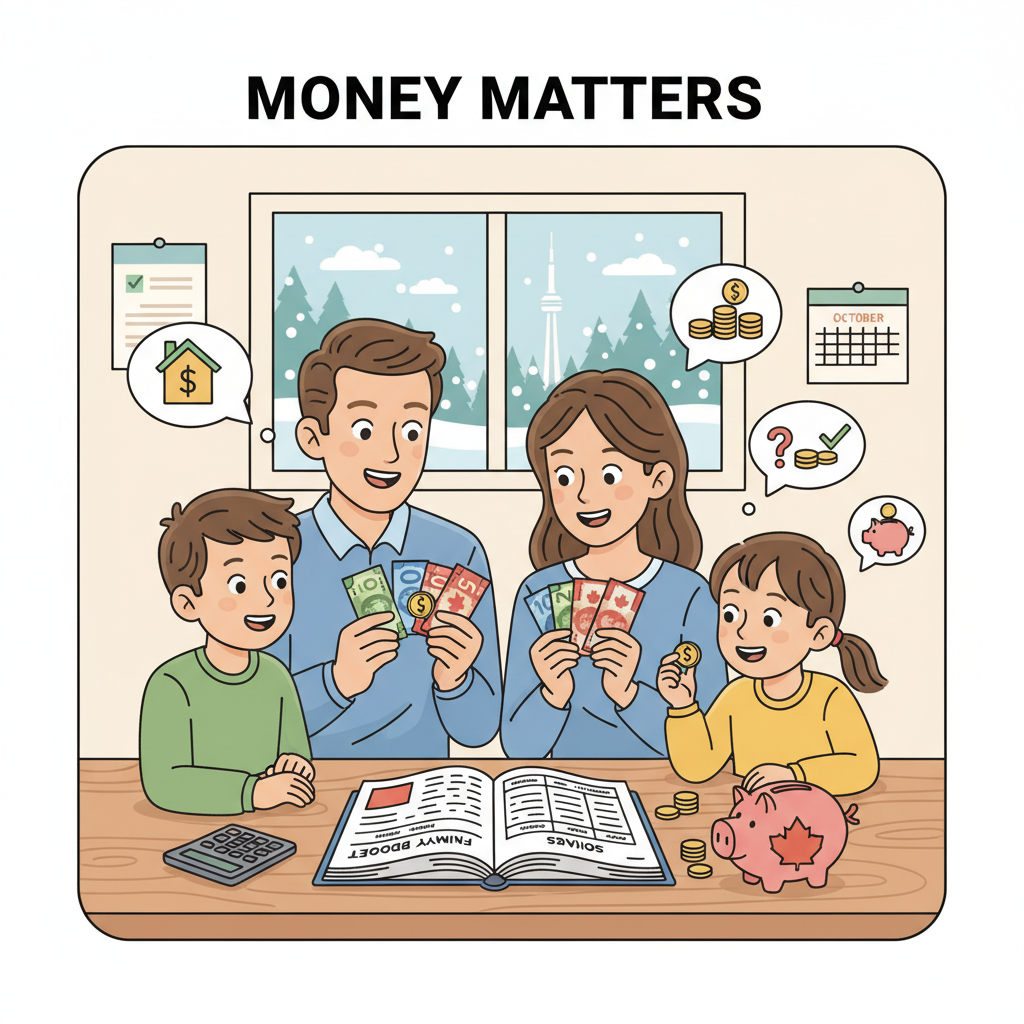
Understanding Financial Literacy Requirements Across Provinces
Financial literacy is not a standalone subject in Canadian schools; instead, it is often woven into existing subjects like Math, Social Studies, and Career Studies. While the specific implementation can vary by province and territory, the overarching goal remains consistent: to develop students’ understanding of personal finances, responsible spending, saving, investing, and the role of money in society.
For instance, in Ontario, the curriculum for grades 1-8 integrates financial literacy expectations within the Mathematics curriculum, covering topics like understanding money, budgeting, and the value of goods and services. By Grade 4, students begin to explore simple financial transactions and the concept of income and expenses. Further details can be found on the Ontario Ministry of Education website. Similarly, British Columbia’s curriculum includes elements of financial literacy within Mathematics and other areas, focusing on real-world applications of mathematical concepts related to money. You can explore the specific learning outcomes on the BC Curriculum website.
Why Financial Literacy Matters for Canadian Students
In today’s world, children are exposed to money-related decisions earlier than ever—whether through online purchases, digital games, or everyday spending choices. Financial literacy helps children understand how money works, how choices affect outcomes, and how to plan ahead.
Canadian education systems increasingly recognize that financial literacy supports more than just money management. It strengthens problem-solving, critical thinking, and real-world math skills—foundations that support learning across subjects.

Rather than treating financial literacy as a standalone subject, schools integrate it into core learning areas so students can apply concepts in meaningful, age-appropriate ways.
How Financial Literacy Is Taught Across Canadian Provinces
In Canada, education is governed at the provincial and territorial level, so financial literacy is introduced differently across the country. However, the overall approach is consistent: financial concepts are embedded within subjects such as Mathematics, Social Studies, and Career-related learning.
For example, in Ontario, financial literacy expectations are integrated into the Mathematics curriculum from the early grades onward. Students gradually learn about money, budgeting, and financial decision-making through problem-solving activities. British Columbia follows a similar model, emphasizing real-world applications of math and everyday financial understanding.
While frameworks vary, provinces share a common goal—helping students develop practical financial understanding that grows with them over time.
What Children Learn About Money by Age
For children aged 4–12, financial literacy instruction focuses on building foundational understanding rather than advanced financial theory.
Early Years (Kindergarten to Grade 3)
Children begin by recognizing Canadian coins and bills, counting money, and understanding that money is exchanged for goods and services. They are introduced to basic ideas such as saving, spending, and making simple choices.
Middle Elementary (Grades 4–6)
As students grow, they explore budgeting, income and expenses, and the difference between needs and wants. Math lessons may include calculating costs, comparing prices, or understanding simple financial scenarios. These activities help children connect classroom learning to real-life situations.
At this stage, the focus is not perfection but understanding—helping children think logically about money and consequences.
How Parents Can Support Financial Learning at Home
While schools introduce financial concepts, parents play a key role in helping children apply them in everyday life.
Simple actions can make a meaningful difference:
- Talk openly about money in age-appropriate ways, such as explaining choices at the grocery store
- Use allowances or small responsibilities to teach earning, saving, and planning
- Set saving goals together, helping children track progress and practice patience
- Involve children in real-life math, such as comparing prices or estimating totals
These experiences reinforce classroom learning and help children see financial literacy as a practical skill rather than an abstract topic.
Financial Literacy Starts With Strong Math Foundations
Understanding money relies heavily on math skills—number sense, reasoning, and problem-solving. When children struggle with foundational math concepts, financial literacy can feel confusing or overwhelming.
Structured learning support helps children build confidence in these core skills. When math concepts are clear, children are better equipped to understand budgeting, percentages, comparisons, and long-term planning.
Wondering whether your child’s math skills are supporting real-world learning like financial literacy?
Join our Free Trial Class to experience how Think Academy’s guided instruction helps students build strong foundations, develop critical thinking, and apply math confidently in real-world contexts
About Think Academy
Think Academy, part of TAL Education Group, supports K–12 students across Canada by building strong math foundations and developing critical thinking skills. Beyond academic results, we focus on learning ability, curiosity, and healthy study habits that prepare students for real-world challenges.
With experienced teachers, research-based teaching methods, and innovative AI-powered learning tools, Think Academy supports every child’s journey from classroom confidence to long-term growth.
Want more insights into math learning and parenting in Canada?
Subscribe to the Think Academy Blog for weekly tips and the latest resources.