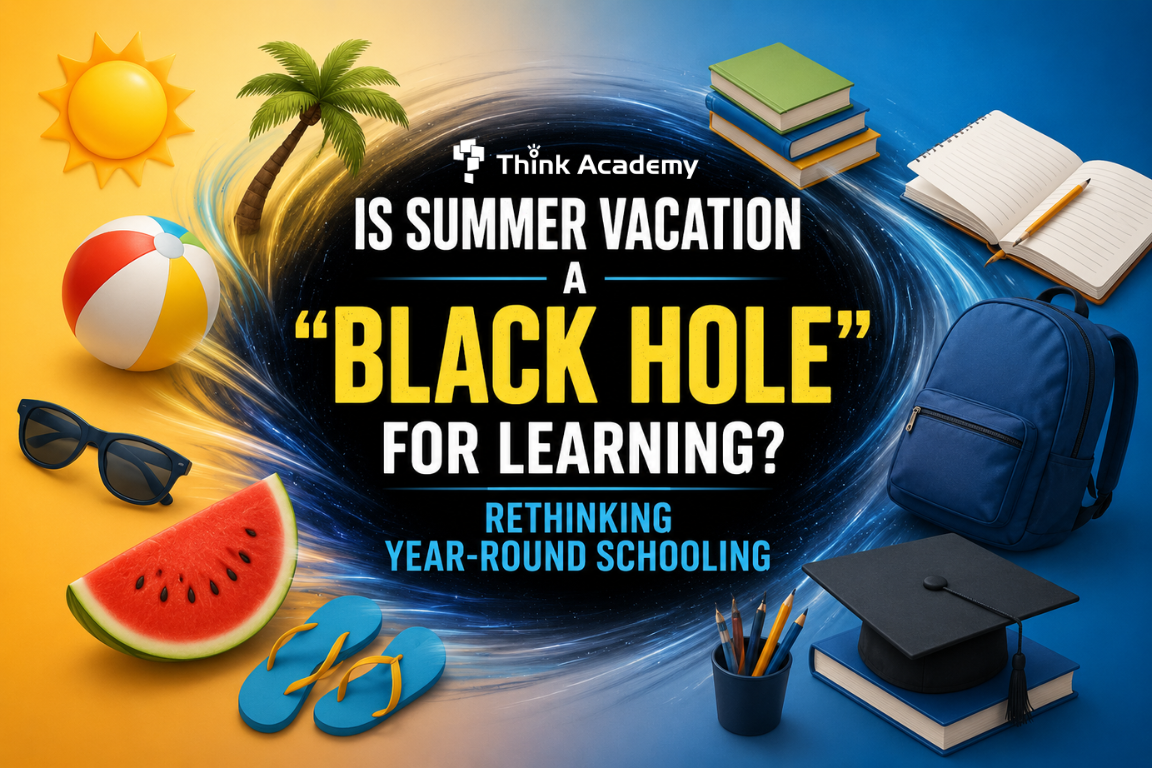
Every spring, Canadian parents ask the same question: how much will my child forget over the summer? It’s a real concern with real evidence behind it. Research from the National Summer Learning Association suggests students can lose up to two months of math skills during a long summer break, a phenomenon educators call summer learning loss or the “summer slide.” This guide for Canadian parents covers what the research actually shows, who’s most affected, why year-round schooling is increasingly discussed as an alternative, and — most practically — what families can do to keep learning active over the summer without turning July and August into a homework prison.

What is summer learning loss?
Summer learning loss refers to the decline in academic skills that many students experience during the long summer break between school years. It’s not a vague worry — it’s been studied repeatedly across decades, and the findings are reasonably consistent.
According to the National Summer Learning Association and Brookings Institution research:
- The average student loses around two months of math skills during summer break
- Reading skill losses are smaller on average but still meaningful, particularly for younger students
- Low-income students are disproportionately affected because they often have less access to enriching activities, books, and learning opportunities during the break
- Losses compound year over year — by the end of elementary school, the cumulative gap can be substantial
It’s worth being honest about the limits of this research. The exact magnitudes are debated, the effects vary significantly by subject and age, and some recent studies find smaller effects than the headline numbers suggest. But the general pattern — that long, unstructured breaks lead to skill regression, particularly in math — is well-established.
Why is math hit hardest?
Math is the subject most consistently affected by summer learning loss for a few reasons:
Math is cumulative. Each concept builds on the one before. Forgetting basic multiplication doesn’t just hurt your multiplication skills — it weakens the foundation for fractions, algebra, and everything that follows.
Math requires deliberate practice. Reading happens naturally in daily life — signs, menus, screens, conversations. Math practice doesn’t happen unless someone deliberately sets it up. A child who isn’t doing math problems over the summer is genuinely not practising at all.
Math is procedural. Procedures decay faster than concepts. A child can remember what division means after months without doing any, but the actual procedure for long division often slips entirely.
This is why math-specific summer activity has shown the most measurable benefit in addressing summer loss.
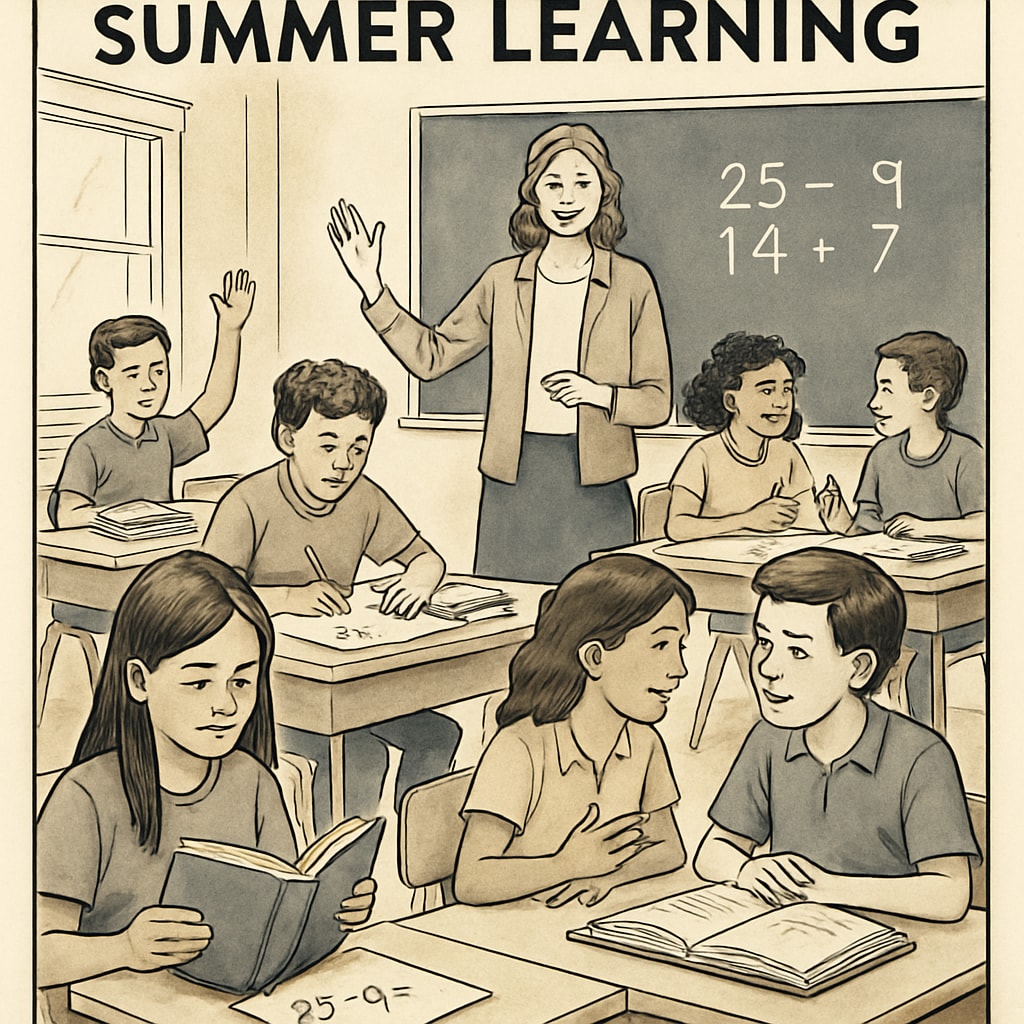
How much do children actually lose over summer?
The research findings vary by age and subject:
| Age group | Typical math loss | Typical reading loss |
|---|---|---|
| Grades 1–3 | 1–2 months | Smaller, varies by student |
| Grades 4–6 | 2–3 months | 1–2 months |
| Grades 7–8 | 2–3 months | Variable; depends on reading habits |
| High school | Less studied; likely meaningful in math-heavy subjects | Smaller |
These are averages. Individual variation is large. A child who reads daily, does math games, or engages with any kind of structured learning over the summer often comes out of break at or above their June level. A child who does no academic activity for 8–10 weeks tends to slip more.
The income gap
One of the most consistent findings in summer learning research is that the summer slide is much larger for lower-income students. The reasons are mostly about access:
- Books at home (the strongest predictor of summer reading)
- Access to libraries, tutors, or summer programs
- Parental time and educational background
- Family routines that include academic activity
In Canada, where public school quality is relatively consistent across income levels during the school year, the summer break is often where socioeconomic education gaps widen most. This is one reason summer enrichment programs and library outreach have become a focus for educational policy in Ontario and elsewhere.
Is year-round schooling the answer?
Frustration with summer learning loss has fuelled a long-running debate about restructuring the school calendar to distribute breaks more evenly throughout the year — known as year-round schooling.
Under a year-round model, the total number of instructional days stays the same (around 180), but breaks are redistributed: shorter, more frequent vacations replace the single long summer break. The most common pattern is the 45-15 schedule — 45 days of school, 15 days off, repeating four times across the year.
The argument for it: shorter breaks mean less skill decay between terms. Research suggests modest academic gains, particularly for students at risk of summer learning loss.
The argument against it: total instructional time is the same, implementation matters more than the calendar itself, and the logistical disruption to working families and seasonal industries is real.
For most Canadian families this is largely a theoretical discussion — year-round schooling has not been broadly adopted in Canada and the vast majority of schools still follow the traditional September-to-June calendar. (For a deeper look at how year-round schooling works and where it’s used in Canada, see our complete guide to year-round schooling for Canadian parents.)
This means the practical question for most Canadian families isn’t “should we switch schools” — it’s “how do we handle the long summer break we actually have?”

How Canadian parents can prevent summer learning loss
The good news: summer learning loss is one of the most preventable academic challenges your child will face. Modest, consistent activity over the summer dramatically reduces or eliminates the slide.
What actually works
Twenty minutes a day, not two hours a week. Consistent short sessions beat sporadic long ones. Twenty minutes of math practice four days a week keeps skills sharp; one 90-minute session on Sunday doesn’t, and creates resentment.
Math practice in particular. Because math is the subject most affected by summer loss, this is where structured activity matters most. Reading naturally happens for many children; math doesn’t unless you deliberately make it happen.
Make it active, not passive. Watching math videos doesn’t have the same effect as actually solving problems. The same is true of reading — being read to is good, but the child actively reading is what builds skills.
Mix structured and exploratory. Some children respond well to a curriculum-based summer program. Others need a lighter touch — math games, cooking that involves measurement, math-themed puzzles, board games with strategic elements. Both work; the right balance depends on your child.
Reading every day, ideally for 30+ minutes. Even casual reading prevents most summer reading loss. Library trips, e-reader apps, audiobooks for younger kids — anything that keeps a child reading.
Plan for the last two weeks. Many children slip most in the final weeks of summer when boredom and routine breakdown set in. Front-load fun activities and keep a small daily academic routine through August.
What doesn’t work as well as parents hope
- Workbooks alone. Most children resist them and they aren’t particularly engaging.
- Long unstructured “study sessions.” A two-hour math homework block on a summer afternoon is counterproductive.
- Heavy academic camps for resistant kids. If your child is going to fight you on it, the resentment costs more than the learning gains.
- Cramming the week before school starts. Doesn’t undo 10 weeks of decay.
A realistic summer plan by grade
| Age group | Realistic daily commitment | Focus |
|---|---|---|
| Grades K–2 | 15 min reading + 10 min math games | Light, playful, parent-led |
| Grades 3–5 | 20 min reading + 15–20 min math practice | Mix of practice and games |
| Grades 6–8 | 25–30 min reading + 20–30 min math | Slightly more structured |
| High school | 30–45 min depending on courses + light reading | Self-directed if possible |
These are minimums, not maximums. Children who are engaged can do more without it feeling like work — but starting at this level and adjusting up is much better than starting at “two hours a day” and getting pushback.
Structured summer learning programs
For families who want more support than self-directed summer practice, structured programs are an option. Quality varies wildly. The features that matter most:
Interactive, not passive. A program where your child watches video lessons doesn’t have the same effect as one where they actively work through problems with feedback.
Curriculum continuity. A summer program should reinforce skills your child has just learned and preview what’s coming next — not introduce random material disconnected from the school year.
Personalisation. Generic worksheets don’t address your child’s specific gaps. A program that identifies what your child knows and adapts is meaningfully better.
Teacher feedback, not just auto-grading. Software can tell a child whether they got an answer right or wrong. A real teacher can tell them why they made the specific mistake they made — and that’s what builds lasting skills.
How Think Academy Canada supports summer learning
Think Academy is the international arm of TAL Education Group, one of the largest education companies in the world. Our Canadian programs are specifically designed to prevent summer learning loss — and more broadly, to keep math skills active across the entire calendar year.
Year-round curriculum. Unlike school programs that pause for 10 weeks, our math programs run continuously through the summer. Students who continue with us through July and August come back to school in September ahead of where they were in June, not behind.
Curriculum that runs ahead of the Ontario standard. Our students consistently meet next-grade content before their school classmates do, which means summer learning isn’t review — it’s progress.
Interactive, active learning. Our platform is built around active problem-solving with immediate feedback, not passive video lessons. This is exactly the kind of summer activity research shows actually prevents skill decay.
Teachers who mark every homework set personally. Not algorithmic grading. Real feedback on the types of mistakes your child is making, which is what closes skill gaps before they become entrenched.
Free math assessment. Before committing to any summer program, find out where your child actually stands. Our free assessment takes about 20 minutes, gives you a detailed feedback report on strengths and gaps by topic, and includes free practice resources tailored to your child’s level.
Frequently asked questions
What is summer learning loss?
Summer learning loss — also called the summer slide — is the documented decline in academic skills that students experience over the long summer break. Research suggests students can lose up to two months of math skills during summer, with reading losses smaller on average.
Which subjects are most affected by summer learning loss?
Math is consistently the most affected, because it’s cumulative, requires deliberate practice, and is procedural — all factors that cause faster decay during a long break. Reading is affected too, particularly for younger students and those who don’t read regularly during the break.
How can I prevent summer learning loss for my child?
Modest, consistent activity beats sporadic long sessions. Aim for 20–30 minutes of math practice plus 30+ minutes of reading per day, 4–5 days a week. Active practice works better than passive consumption. Structured summer programs can help, especially in math.
How long does it take students to catch up after summer break?
Traditional estimates suggest the first 4–6 weeks of the new school year are spent re-teaching forgotten material. Some recent research suggests the catch-up time is shorter than previously thought, but the general pattern of early-year review holds across most curriculums.
Is summer learning loss worse for some students?
Yes. Lower-income students consistently show larger summer learning losses than higher-income students, primarily because of unequal access to books, programs, and enriching activities during the break.
Would year-round schooling fix summer learning loss?
Probably some of it, but the evidence is mixed. Year-round schooling redistributes breaks but doesn’t add instructional time. It can reduce skill decay between shorter terms, but the academic gains are modest and depend heavily on implementation. For most Canadian families, year-round schooling isn’t a real option anyway — the practical question is how to manage the long summer break in the calendar your school actually uses.
How much summer learning is enough?
For most students, 20–30 minutes of math and 30+ minutes of reading per day, 4–5 days a week, is sufficient to prevent meaningful skill decay. More than this is fine if your child is engaged; less than this won’t fully prevent the slide.
When should I worry about my child’s summer learning?
If your child finished the school year struggling in any subject, summer is when small gaps either get addressed or get bigger. If they finished strong, summer is about maintenance — a lighter routine is fine. Either way, knowing exactly where they stand at the start of the summer matters more than worrying about it abstractly.