Understanding the Everyday Math Curriculum
Everyday Mathematics (EM) is widely used in elementary schools across many districts in Canada. Developed by the University of Chicago School Mathematics Project, the curriculum uses a spiral learning approach, meaning students revisit key concepts repeatedly across grades, each time at a deeper or more complex level.
A concept such as addition may begin with simple object counting in Kindergarten, reappear with number lines in Grade 1, and later expand into structured algorithms. This recurring exposure helps many children gradually build strong connections across topics.
However, the spiral design can sometimes feel unfamiliar to parents:
- Children may move on before showing “mastery” in the traditional sense
- Lessons appear to jump quickly between topics
- Parents may feel unsure how to support their children at home
Understanding that EM is intentionally designed to strengthen long-term retention—and not instant memorization—is the first step toward helping young learners feel confident rather than overwhelmed.
Fostering Mathematical Confidence in Young Learners
Regardless of curriculum, math confidence shapes a child’s willingness to try, make mistakes, and persevere. In early grades, this emotional foundation is often more important than speed or accuracy.
Here are parent-friendly ways to strengthen math confidence at home:
1. Emphasize the Process, Not Perfection
Celebrate thinking, attempts, and strategies—not only correct answers.
Reinforce messages like “You’re figuring it out—keep going!” instead of “That’s wrong.”
2. Celebrate Small Wins
Did they finally understand how to regroup tens?
Did they count independently?
Small accomplishments build lasting belief in their abilities.
3. Connect Math to Everyday Life
Practical examples help children see math as meaningful:
- Counting groceries
- Measuring ingredients
- Estimating distances while walking
- Sorting toys by size or pattern
These simple routines make learning natural and reduce anxiety.
4. Encourage Independent Problem-Solving
Instead of giving answers, ask:
- “What do you notice?”
- “What could you try next?”
- “Does this remind you of something you learned before?”
This aligns perfectly with EM’s goal: building flexible thinkers.
Strengthening Foundational Mathematical Education at Home
Parents don’t need to replace the school curriculum, just gently reinforce it. Consistent small practices are highly effective for K–2 children.
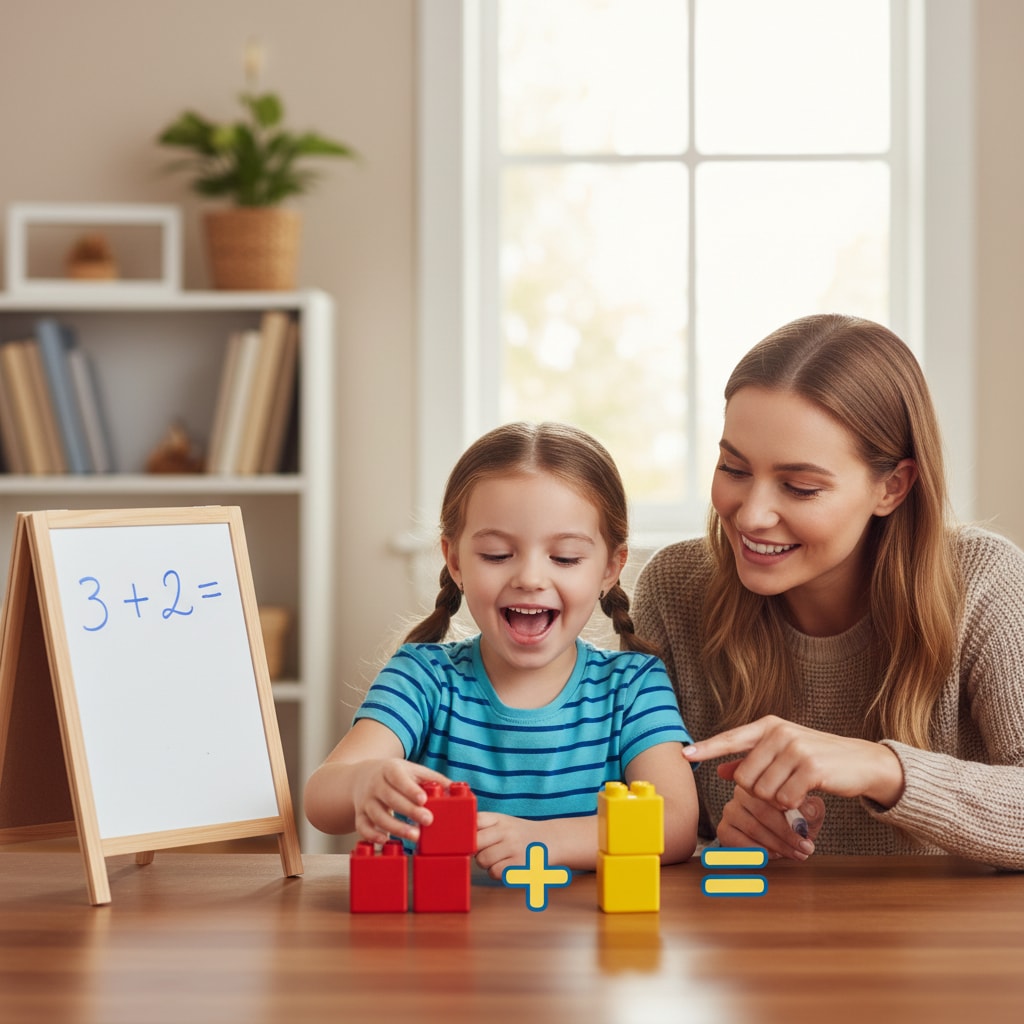
1. Use Hands-On Manipulatives
Counting blocks, beads, buttons, pasta—anything works.
These make abstract concepts concrete and support visual learning.
2. Incorporate Math Games
Games teach numeracy without pressure:
- Counting games
- Simple board games (Chutes & Ladders, Trouble)
- Card games that match numbers or compare values
- Age-appropriate math apps
Games make repetition enjoyable, which is exactly what spiral learning needs.
3. Practice Basic Facts in Short Bursts
Even though EM prioritizes deep understanding, fluency with addition/subtraction facts helps children progress more confidently.
5 minutes a day is enough.
4. Read Math-Themed Storybooks
Books about patterns, shapes, counting or measurement build comfort with mathematical thinking—especially for children who learn better through stories.

Partnering with Schools for Better Support
Strong communication with your child’s teacher makes a tremendous difference. Teachers can clarify:
- What concepts are currently being taught
- How EM approaches a particular topic
- Where your child may need extra support
- Recommended strategies or resources for home
Many Canadian schools also provide EM parent guides, unit overviews, and online practice tools. Understanding the school’s teaching methods helps parents build consistent home routines without confusion.
For more insights into effective mathematics instruction, resources like Britannica’s section on Mathematics offer a broader perspective on the subject.
Conclusion: Turning Confusion Into Confidence
Mastering Everyday Mathematics, building math confidence, and strengthening foundational math education is a shared journey between home and school. With patient support, positive reinforcement, and practical daily routines, parents can help young children develop skills—and confidence, that will benefit them far beyond Grade 1.
This early foundation is not about speed or perfection, but growth, resilience, and the joy of discovering how math connects to the world around them.
About Think Academy Canada
Looking for more structured support or a deeper understanding of your child’s math level?
Think Academy Canada offers free online math evaluations for Grades K–8, along with a free trial class designed to build confidence through small-group learning.
- Identify strengths and learning gaps
- Receive personalized guidance from expert instructors
- Access curriculum-aligned practice resources
Explore our Math Evaluation and Trial Class pages to continue supporting your child’s learning journey.