


For many Canadian parents, managing screen time feels like a constant balancing act. Screens are everywhere, used for schoolwork, entertainment, communication, and creativity. Families often wonder how to integrate screens into their child’s daily routine without compromising learning, attention, or healthy development.
When approached thoughtfully, screen time management for learning can help children aged 4–12 use technology as a tool rather than a distraction. With clear boundaries, quality content, and active guidance, screens can support academic growth while helping children build healthy digital habits that last.
Understanding Healthy Screen Time for Children
The digital world offers both valuable learning opportunities and unique challenges for young children. For elementary-aged learners, healthy screen time is not about eliminating screens, but about how and why they are used.
The Canadian Paediatric Society (CPS) encourages parents to focus on intentional, age-appropriate screen use. Their guidance emphasizes limits, mindful content selection, and adult involvement—especially for younger children. Educational, interactive screen use is far more beneficial than passive consumption, such as endless video watching.
When children actively engage with content, solving problems, responding to questions, or creating something of their own, screens can support critical thinking and deeper learning rather than replacing it.

Practical Strategies for Learning-Focused Screen Time
Effective screen time management starts with structure and communication. Children are more likely to follow boundaries when they understand the purpose behind them.
Set Clear and Consistent Screen Time Rules
Establish simple, predictable guidelines around when and how screens are used. Many Canadian families find it helpful to create a family media plan—setting expectations for school days versus weekends, defining screen-free times (such as during meals or before bed), and agreeing on which activities count as “learning screen time.”
Discussing these rules together helps children feel included and increases cooperation.
Co-View and Co-Play Whenever Possible
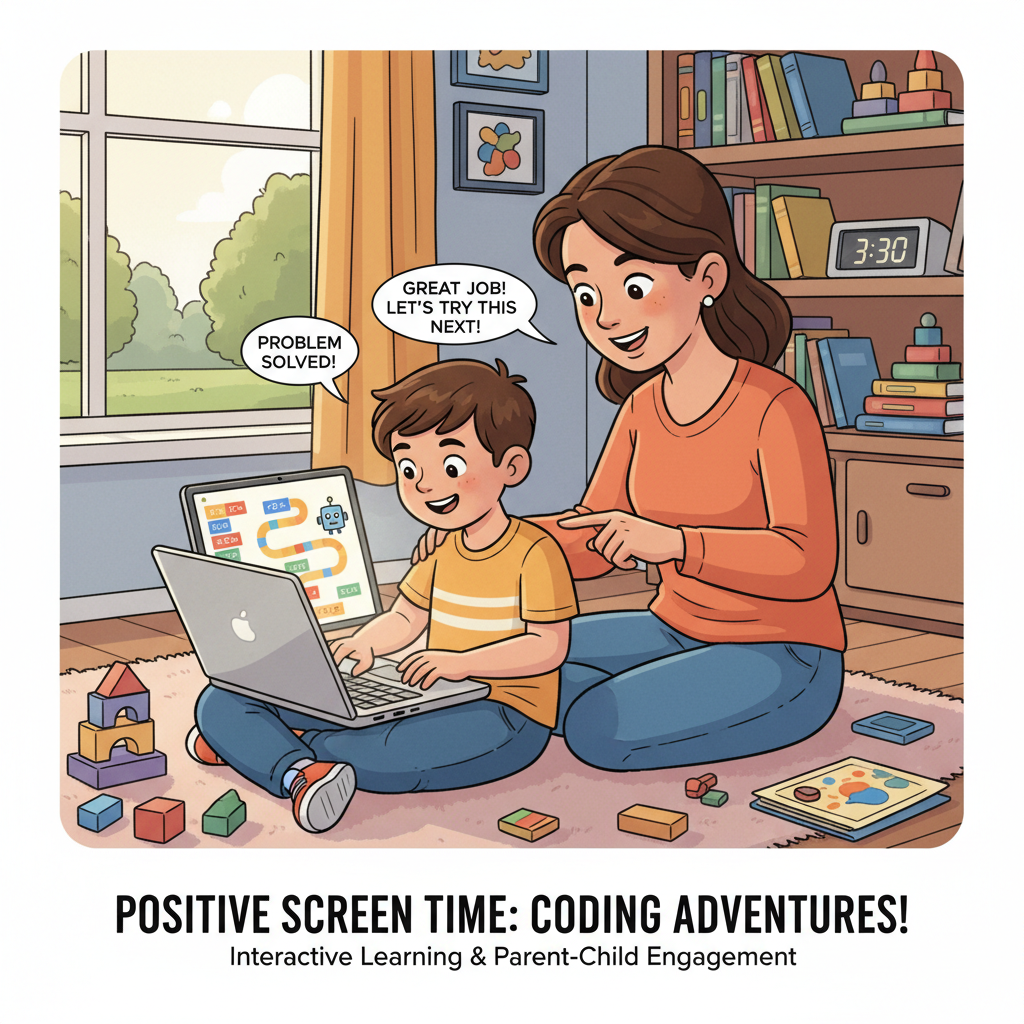
Watching or playing together turns screen time into a shared learning experience. Asking questions about what your child is doing, encouraging them to explain their thinking, or solving challenges together helps reinforce learning and strengthens family connections.
Choose High-Quality, Canadian-Friendly Educational Content
Not all educational content is created equal. Look for interactive, age-appropriate apps and programs that support problem-solving, creativity, and curiosity.
Canadian platforms such as CBC Kids and TVO Kids offer trusted, curriculum-aligned content designed specifically for children in Canada. Previewing content before introducing it helps ensure it aligns with your child’s learning needs and values.
Connect Digital Learning With Offline Practice
Screens are most effective when paired with offline activities. After a digital math game, encourage your child to apply the concept using physical objects, drawings, or simple worksheets. This reinforces understanding and helps children transfer skills beyond the screen.
Many families also use screen time as a motivator, earned after homework, reading, or outdoor play, rather than as the default activity.
Built-in parental controls and time-limit features on devices can support consistency while helping children gradually develop independence.
Building Digital Literacy and Critical Thinking
Screen time management goes beyond time limits—it also involves teaching children how to think critically about what they see online.
Talk openly about online safety, including what information should never be shared and how to recognize content that feels unsafe or misleading. Encourage children to ask questions and come to you when something doesn’t seem right.
Helping children evaluate information, understanding that not everything online is accurate, is an essential skill. Media literacy is becoming increasingly important in Canadian classrooms and everyday life. Through guided discussion, structured problem-solving, and age-appropriate learning activities, Think Academy helps students develop critical thinking skills that support thoughtful and responsible learning both online and offline.
Establishing a Healthy Digital Ecosystem
Successfully managing screen time for learning is an ongoing process. Children’s needs change as they grow, and screen habits will evolve over time.
By balancing digital tools with offline experiences, prioritizing quality content, and actively guiding your child’s screen use, you create a healthy digital environment that supports both learning and well-being. These habits help children develop focus, independence, and digital responsibility—skills that will serve them throughout their academic journey.
Explore Think Academy’s Resource Hub for more learning tips and printable worksheets.
About Think Academy
Think Academy, part of TAL Education Group, supports K–12 students by building strong math foundations and developing critical thinking skills. Beyond academic performance, we focus on learning ability, curiosity, and healthy study habits that inspire a lifelong love of learning.
With experienced teachers, research-based teaching methods, and innovative AI-powered learning tools, Think Academy supports every child’s journey from classroom confidence to long-term growth.
Curious how structured guidance can support your child’s learning habits in a digital world?
Start with a free math evaluation to understand your child’s current level and learning needs, or explore how Think Academy’s guided instruction helps students build focus, confidence, and strong study habits by taking our free trial class.

